La Padrina and the belongings of domesticity | Xevi Bayona
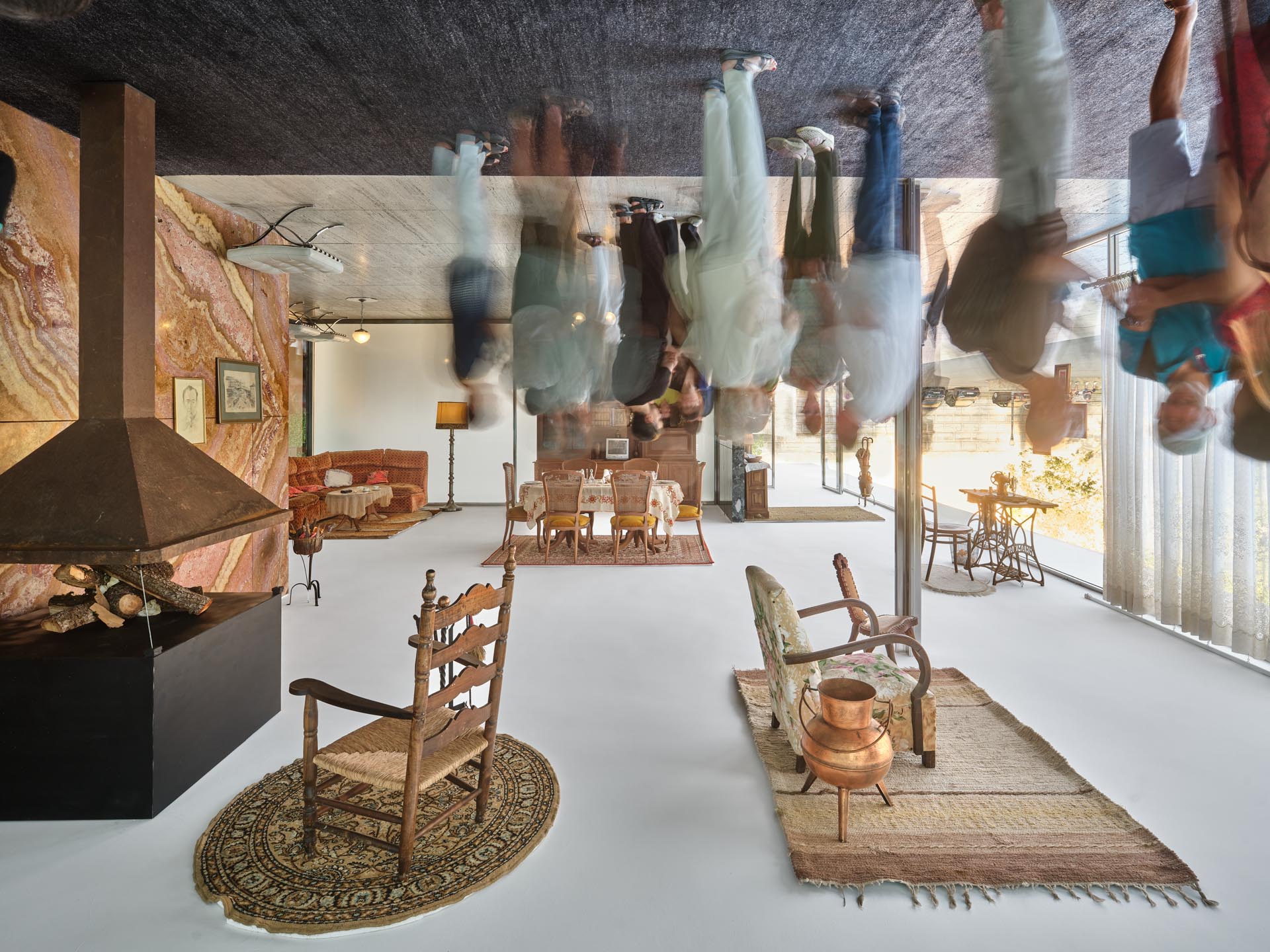
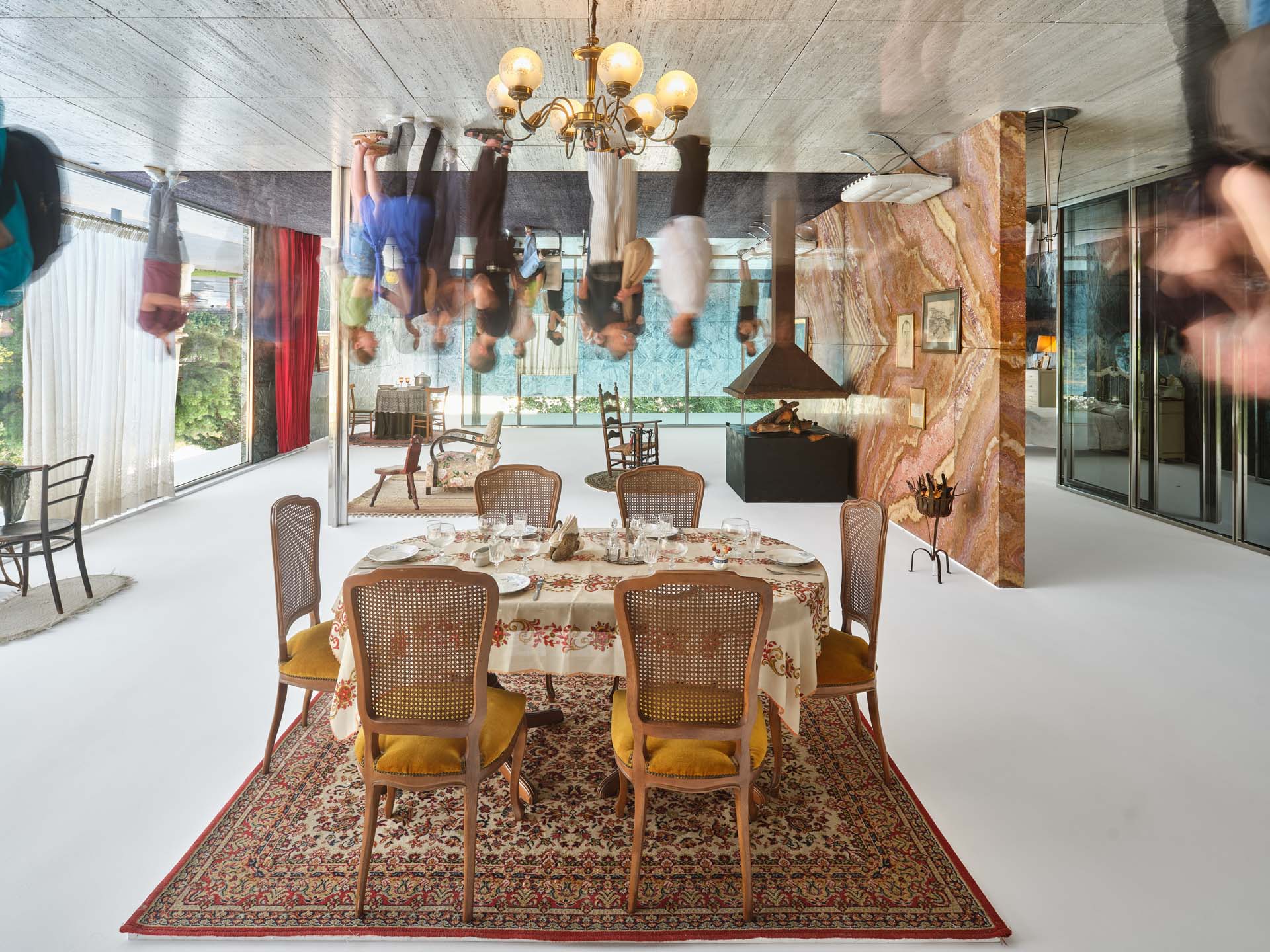
Architecture can make the space for living domestic. It is precisely the inhabitant himself who, to make it domestic, uses belongings; personal properties in the form of furniture and objects where he deposits his soul to keep a piece of his world.
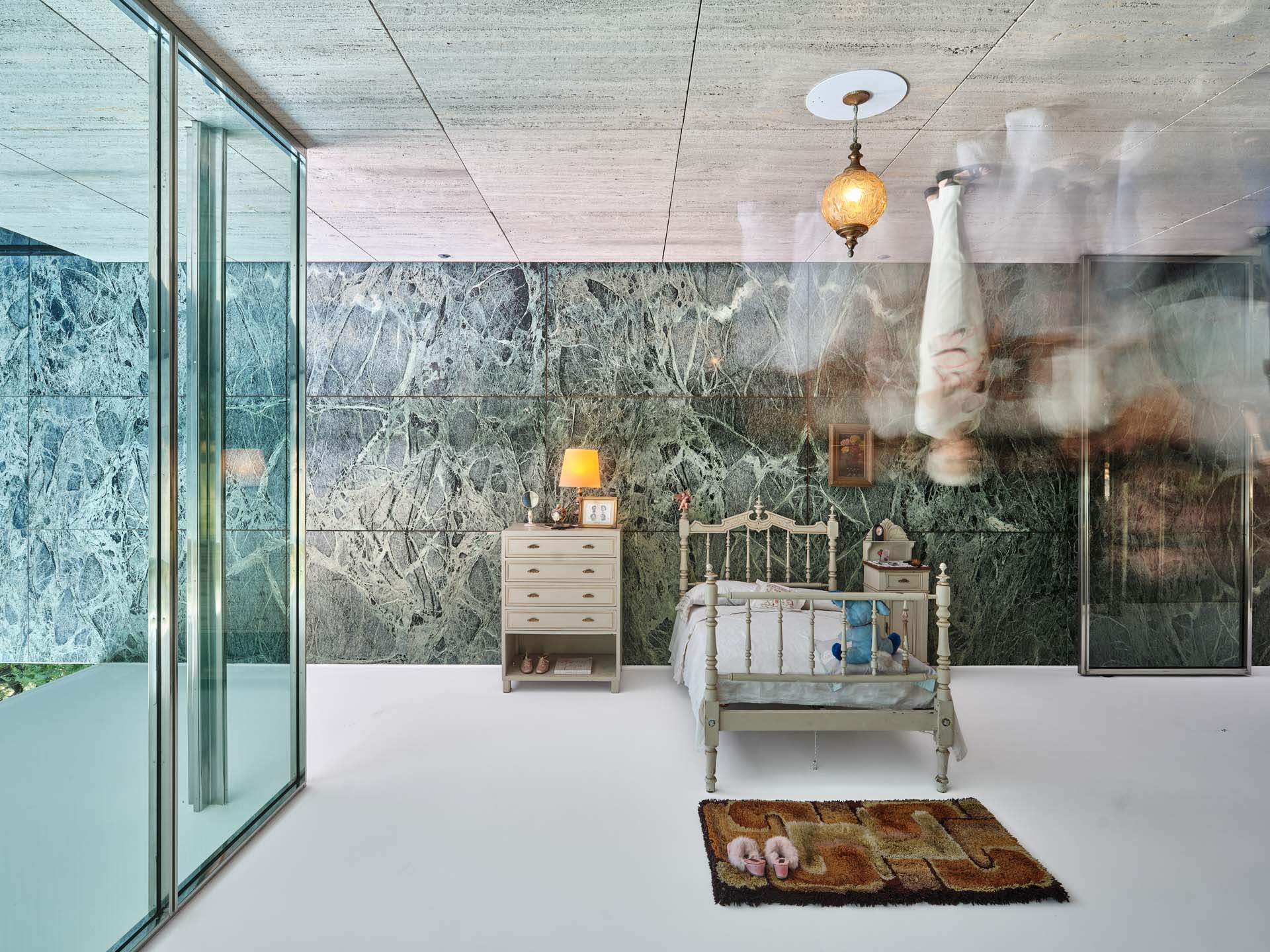
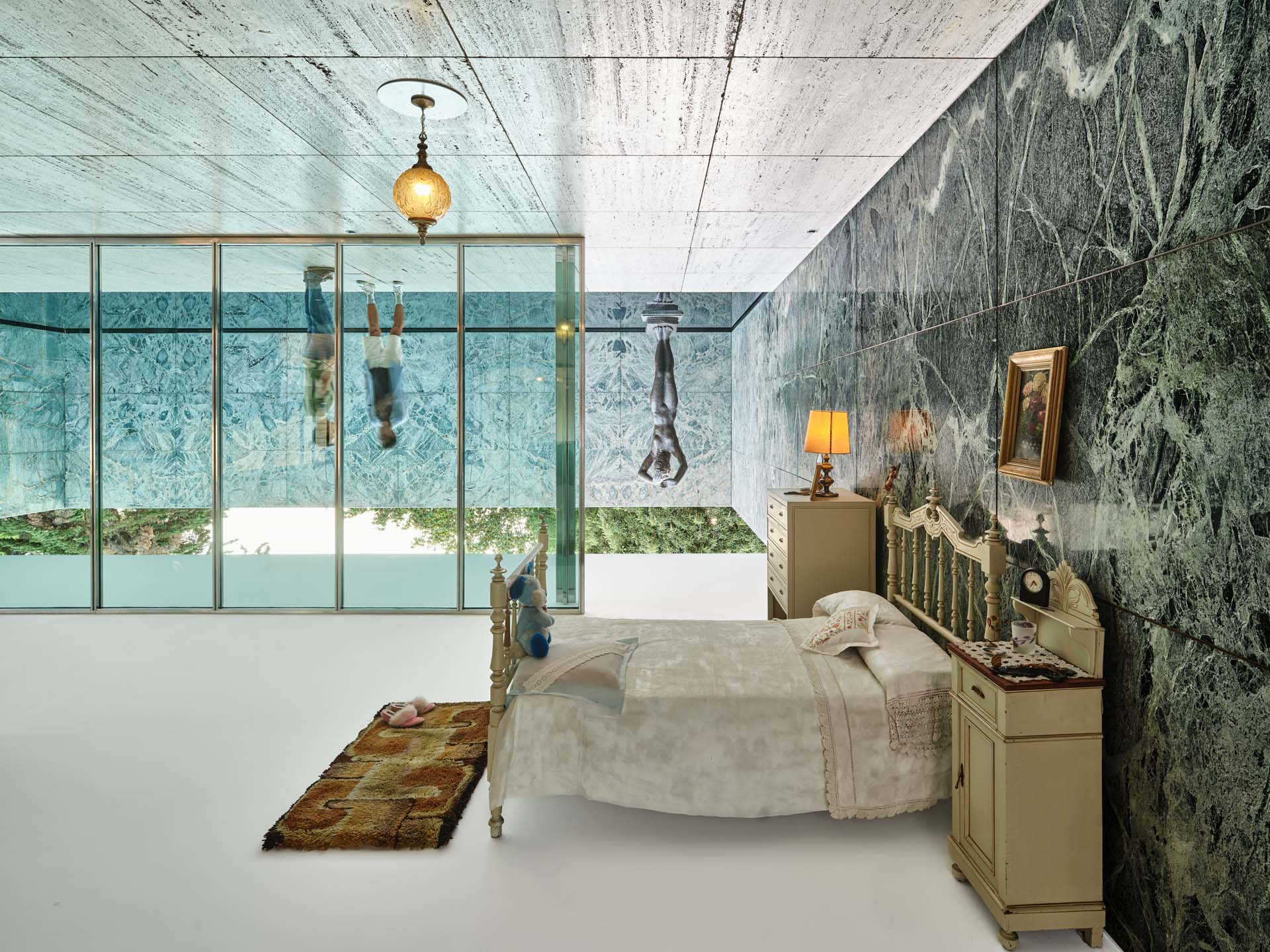
The godmother was born in Barcelona in 1927, approximately the same period that Mies was drafting the pavilion project. More than ninety years later, apart from the memory, only her domesticity remains in the objects that once belonged to this person. Objects that furnish a conventional house in Olot and that now serve to ask us questions.
What domesticity does the Pavilion have? The geometry of the architecture gives the building a vertical symmetry, a centrality of the gaze that travels along a horizon line that divides the sky and the earth.
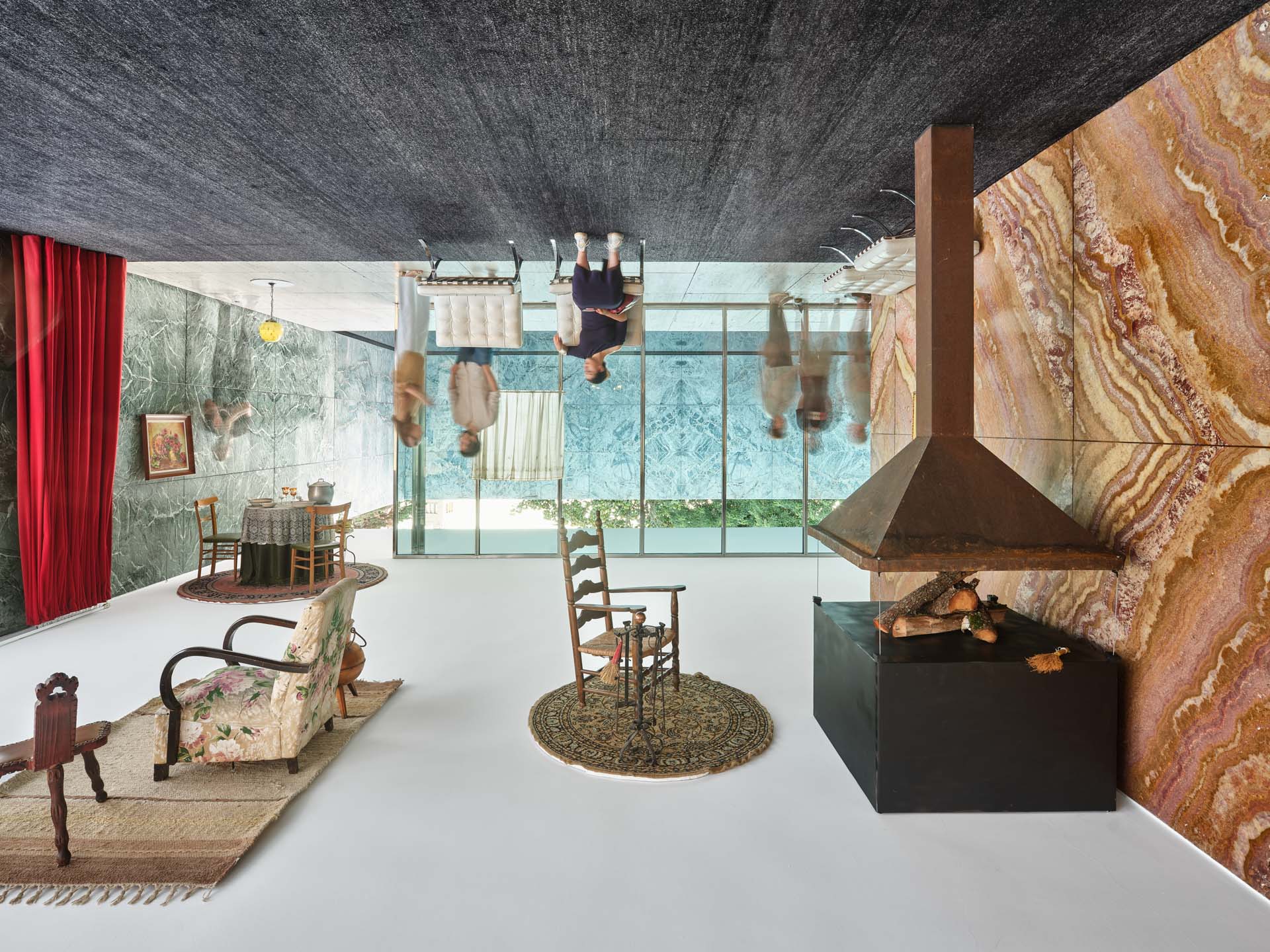
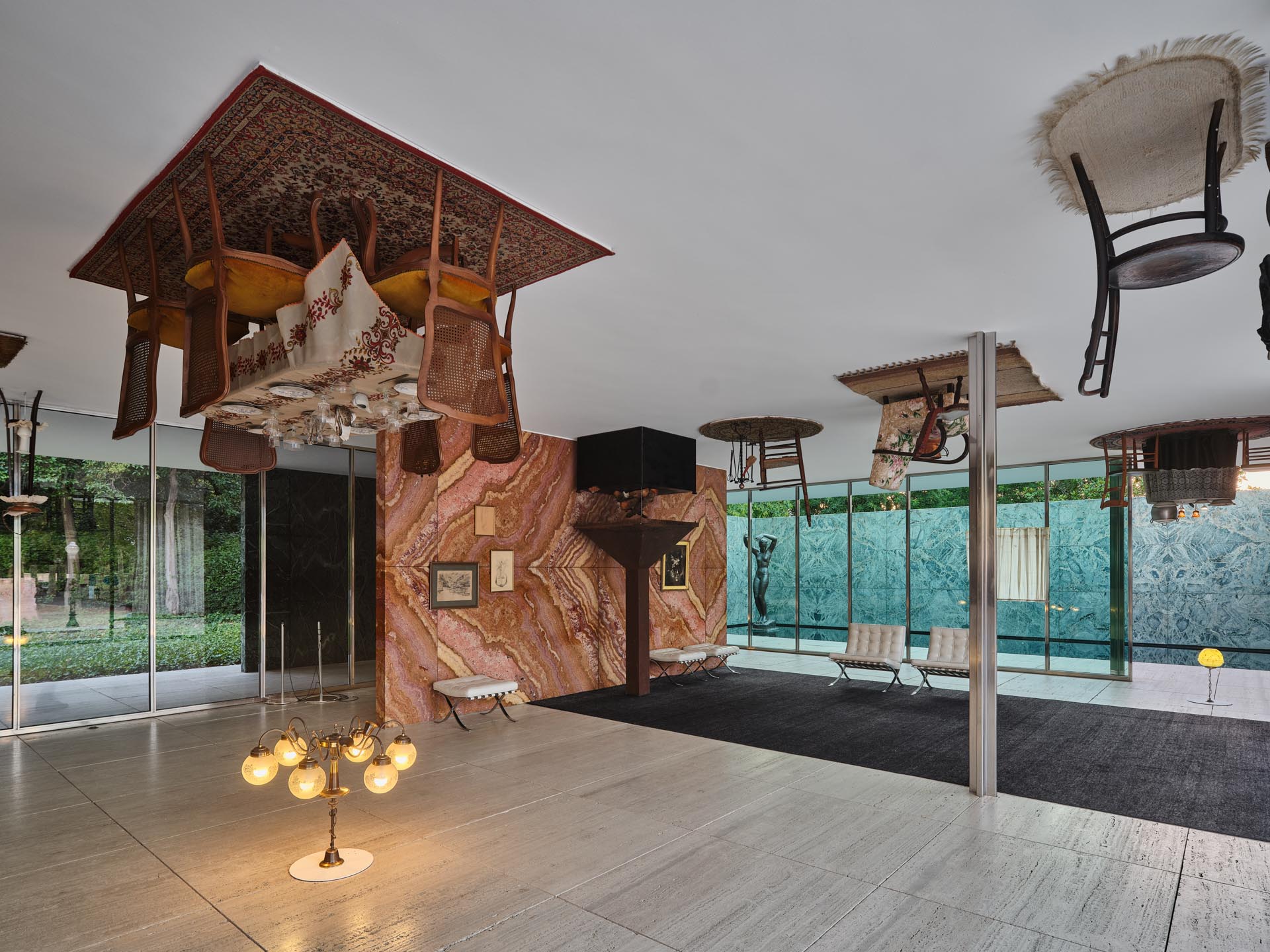
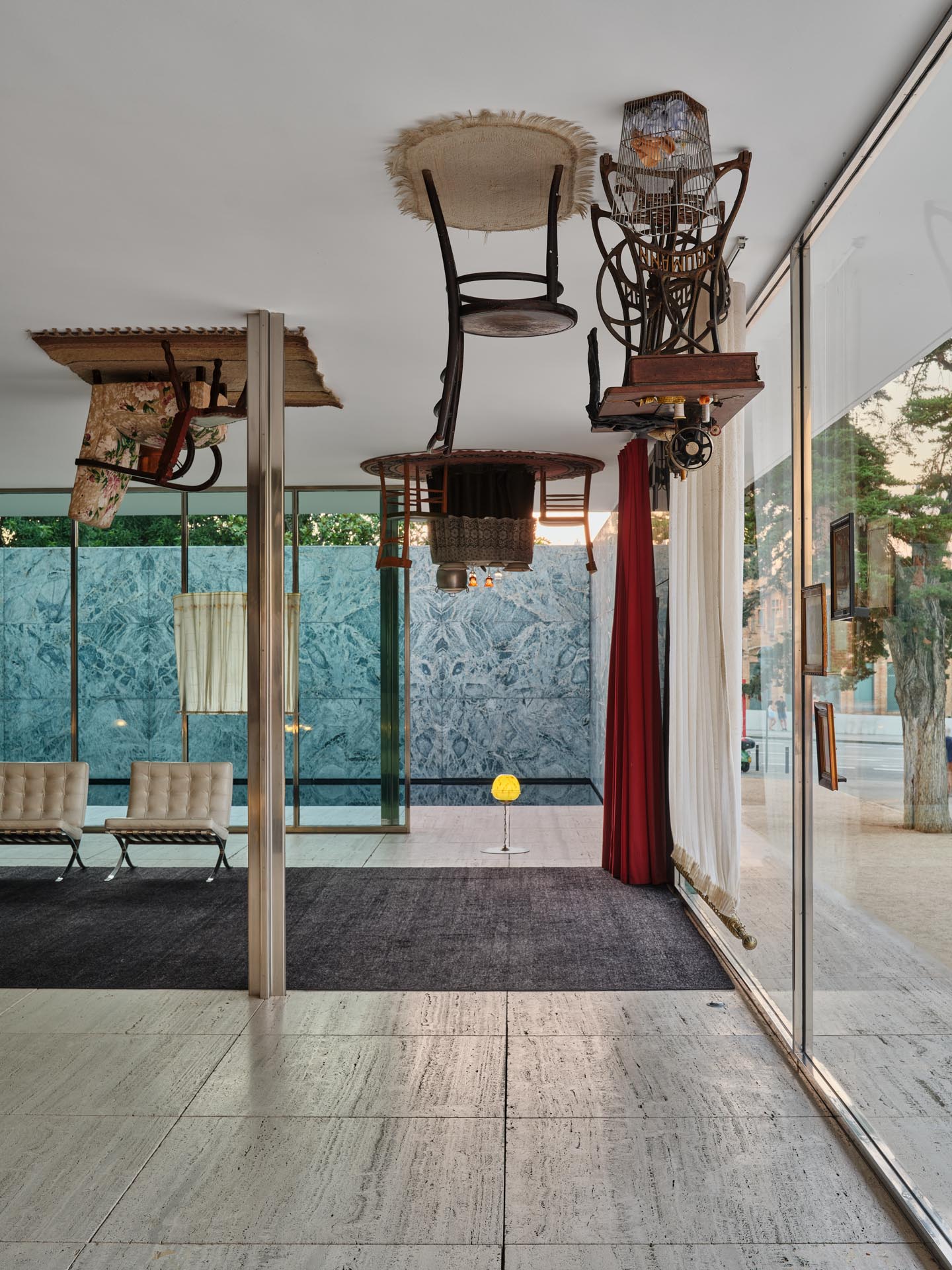
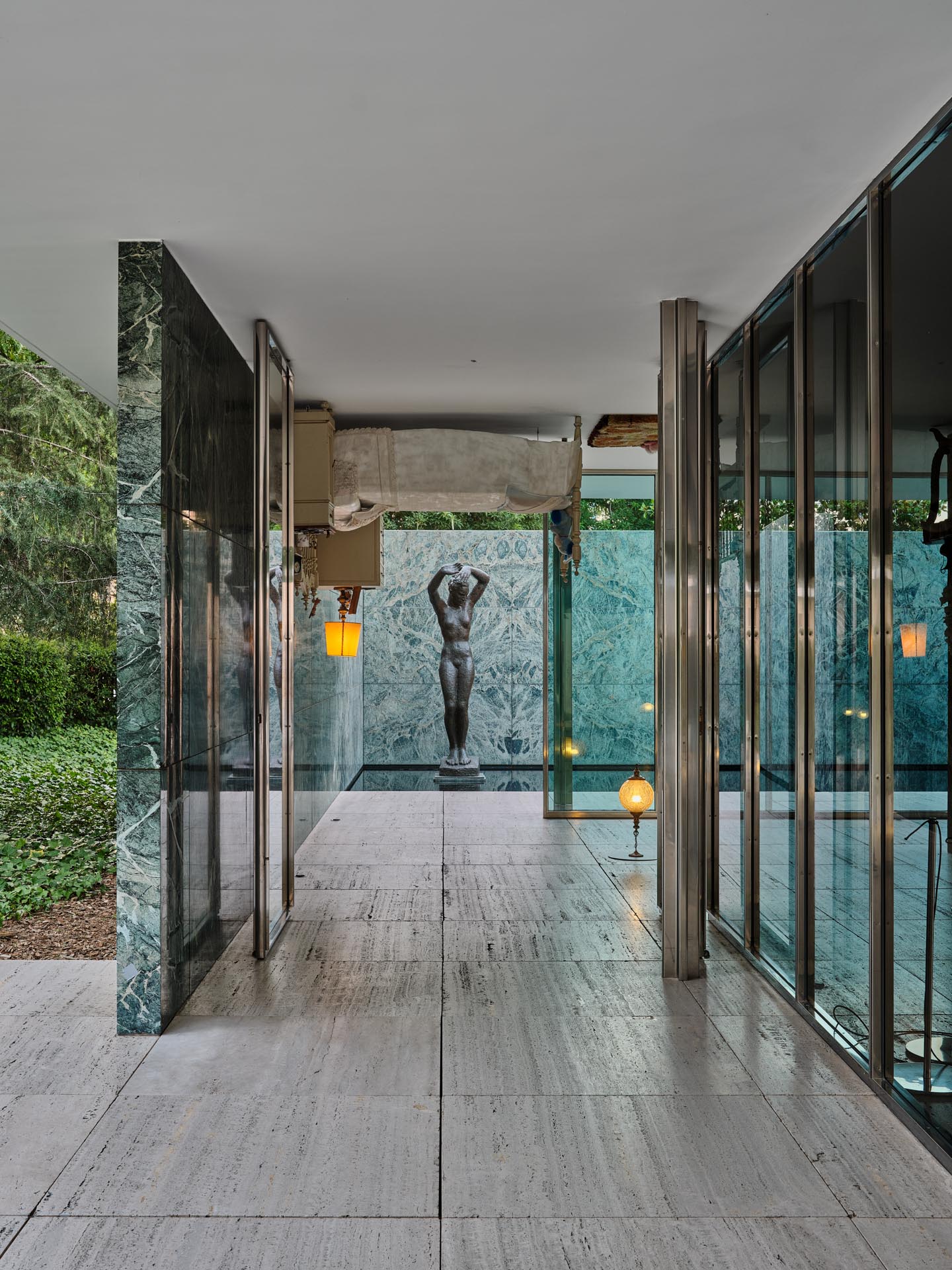
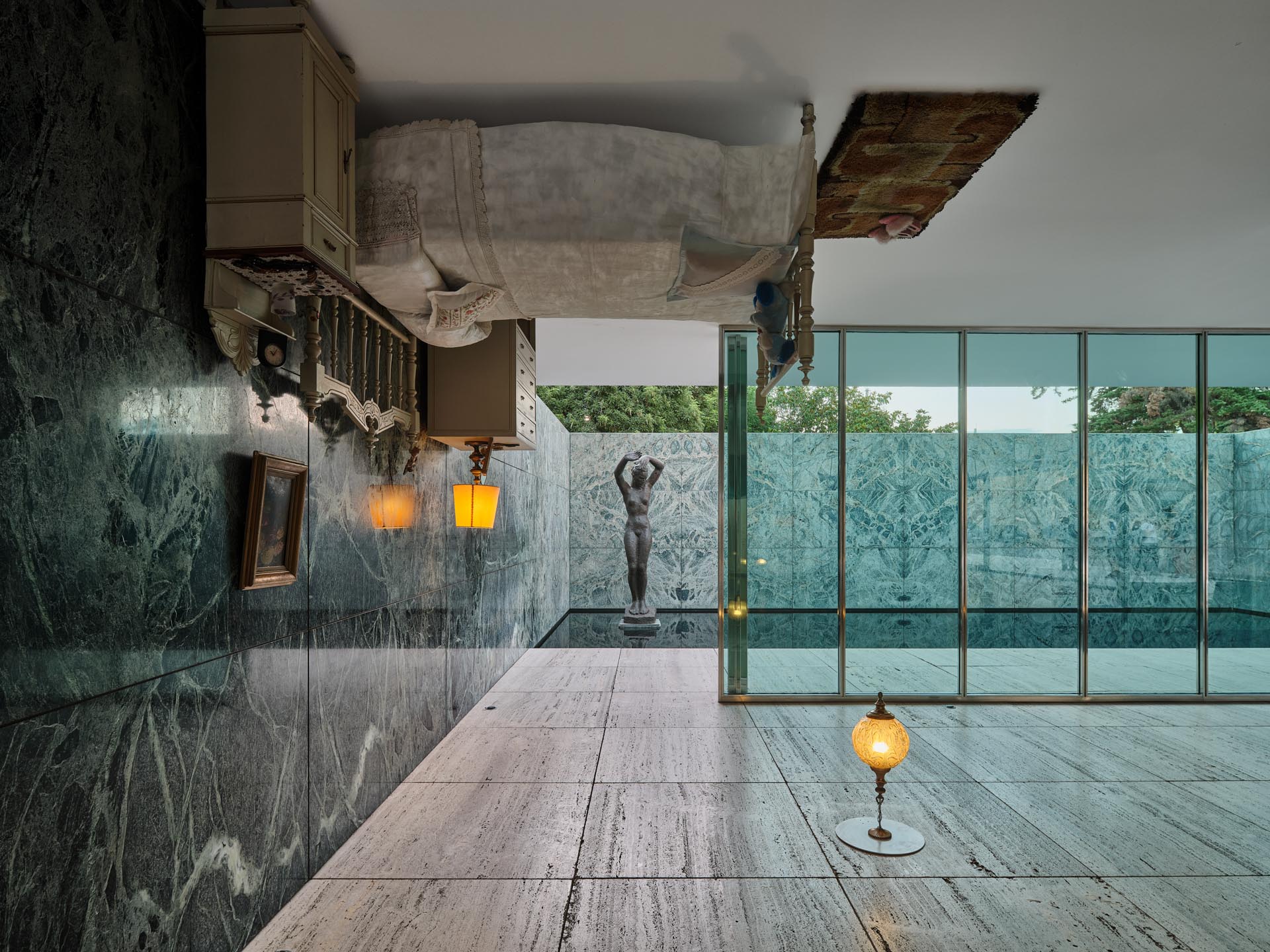
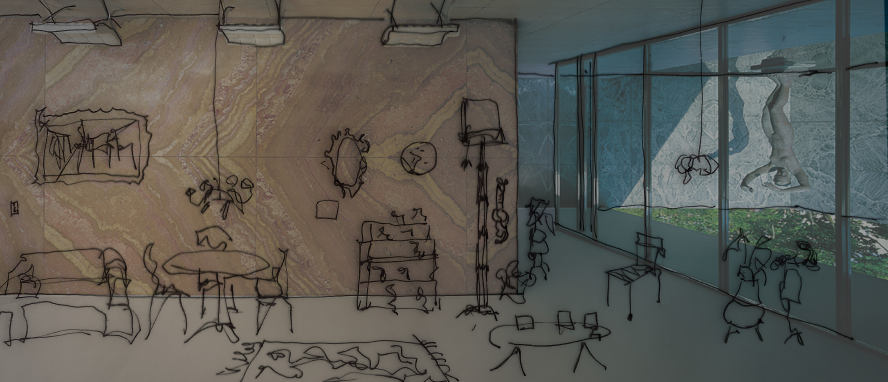
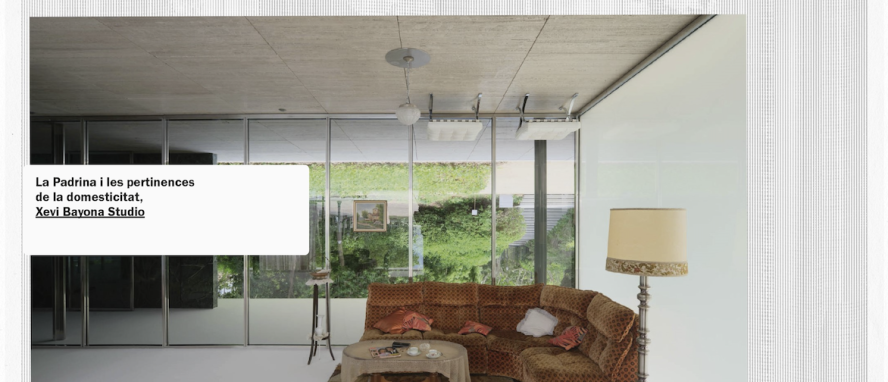
We will furnish the Pavilion with everyday objects to contrast it with the empty and bare space, we will make a move, this time temporary, to inhabit the pavilion symmetrically. The furniture will sit on the ceiling as if it were an invisible city by Italo Calvino.
It is an exercise to explain things by comparison and above all by contrast. A reflection of the space speaking with metaphors of life and also of death. The world above and below, the sky and the earth, the white floor and the travertine ceiling, the water as a porch and the clouds as a carpet. A change of perspective that invites reflection. Questions about the full and the empty. A compendium based on the godmother and the belongings of her domesticity.
In the opening of the artistic intervention La Padrina i les pertinences de la domesticitat, which will take place next Wednesday July 30th at 7:00 PM in the Mies van der Rohe Pavilion, its author, Xevi Bayona, will talk with Anna and Eugeni Bach who intervened in 2017 in the Pavilion with Mies Missing Materiality.
A dialogue within two seemingly opposing perspectives that however share the fact of questioning a space living ways. They will contrast as well their experiences in the design and materialization of this two interventions which radically modify the “natural” image of the Pavilion.
Xevi Bayona (Olot, 1982), founder of Bayona Studio, is an architect and artist from Olot. He studied Fine Arts in Olot, trained as an architect at ETSAB (Technical School of Architecture of Barcelona) with his final project—a Library-Playroom in Espinho, Portugal—and also studied at FAUP (Faculty of Architecture at the University of Porto). He holds a postgraduate degree in Landscape Design from ETSAB and a Master’s degree in Theory and Practice of Architectural Design from ETSAB, with the thesis “The Girona of the Streets – Scale.”
From the very beginning, he has been the Artistic Director of Lluèrnia, the Festival of Fire and Light in Olot. Since 2008, he has been a professor at the Faculty of Architecture at the University of Girona. Since 2018, he has taught in the international master’s program in ephemeral architecture at Elisava. He has given lectures, led workshops, and carried out ephemeral installations in various European cities. He has won several awards, including three FAD awards, with numerous finalist and selected projects. He has received architectural awards and honorable mentions from the Girona region, and was awarded the 2025 European AHI Architectural Heritage Intervention Award and the 2024 international City Scape Award for the renovation of el Firal in Olot, a project developed with Jaume Bach, Anna Bach, Eugeni Bach, Alba Colomer, and Lluís Pauné.
He won the Changing Tracks competition, a European project for three installations in Catalonia, England, and Ireland. Since 2017, he has collaborated and developed projects jointly with Àlex Posada, MID Studio.
He has completed civil works such as the restoration of the Pont de l’Estat in Tortosa over the Ebre River, the rehabilitation of the sports area of Sant Jaume de Llierca, and the Firal of Olot, as well as architectural works such as Casa dels tres murs, Casa Montsacopa, or the Equilibri restaurant. He has created ephemeral interventions such as The Three Kings’ Warehouse at Fabra i Coats, Farbalà at Caixaforum Barcelona, Habitare or Homeless Home, Vermell in Sweden, or Niu de foc at Lluèrnia. He is also curator, alongside Ana Amado and Jaume Prat, of the exhibition “De Puertas a Fuera” at the Casa de la Arquitectura. In 2024, he created the Christmas installation in Plaça Sant Jaume in Barcelona.
Bayona Studio is a workshop for architecture, art, and landscape located at the foot of a volcano in Olot, in the Garrotxa region.
They develop projects to explore emotions through a working method based on experimentation, research, and investigation. They create prototypes and tests that bridge architecture, urbanism, art, landscape, ephemeral installations, and light.
They design atmospheres and landscapes on various physical scales, but especially temporal scales that shape the essence of each project. Their work searches for beauty through a respectful and insightful understanding of the social, anthropological, physical, and cultural environment—to ask questions about the world we inhabit.
<a href=”https://youtu.be/XaXAv-OoGy4?feature=shared”>More videos</a> of the <a href=”https://youtu.be/dWfEnO2Bl8U?feature=shared”>intervention</a>
Date
30.07.2025 → 17.08.2025 | Opening 30.07.2025 19:00h
Bayona Studio:
Xevi Bayona
Cristina Montero
Aniol Coll
Gerard Guillament
Joel Banús
Clara Bayona
Gina Font
Eduard Llorens
Marçal Pons
Emi Martinez
Lluís Bayona
Marta Muñoz
Juna Grau
Noemí Cañadas
With thanks to:
Pere Ramon
Trans Escapa
Jaume Tané
Anna i Eugeni Bach
Jaume Prat
Núria Prieto
Marc Lorente
Photogrphs:
Adrià Goula
Book your tickets for the opening here