

HEBRA, Paula Quintana
The fourth edition of the Viu Montjuïc will take place on October 5 and 6, 2024 in different equipment and countries in the Montjuïc area. More than 70 pieces of equipment are added to strengthen the links between the veïnat and the entire city with a wide range of proposals, itineraries and activities in this great part of the city.
In collaboration with Graner, the performance Hebra is presented at the Mies van der Rohe Pavilion in dialogue with the artistic intervention “Suspendre el Cel” by Brazilian artist Caio Reisewitz.
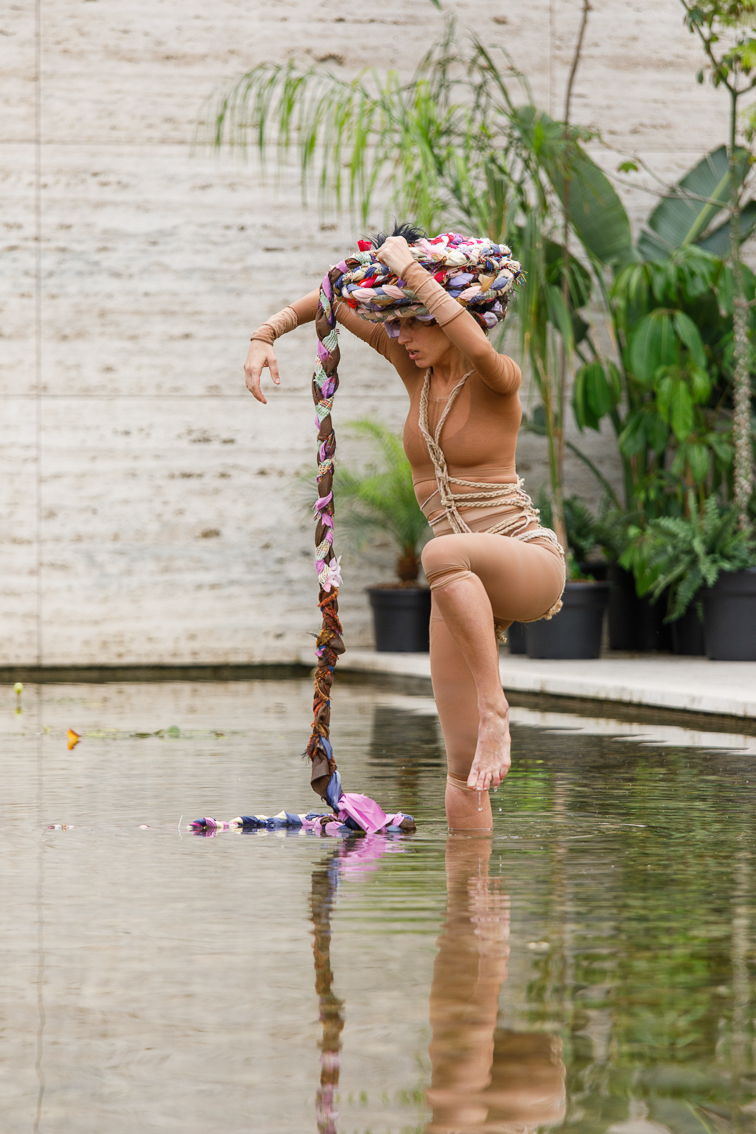
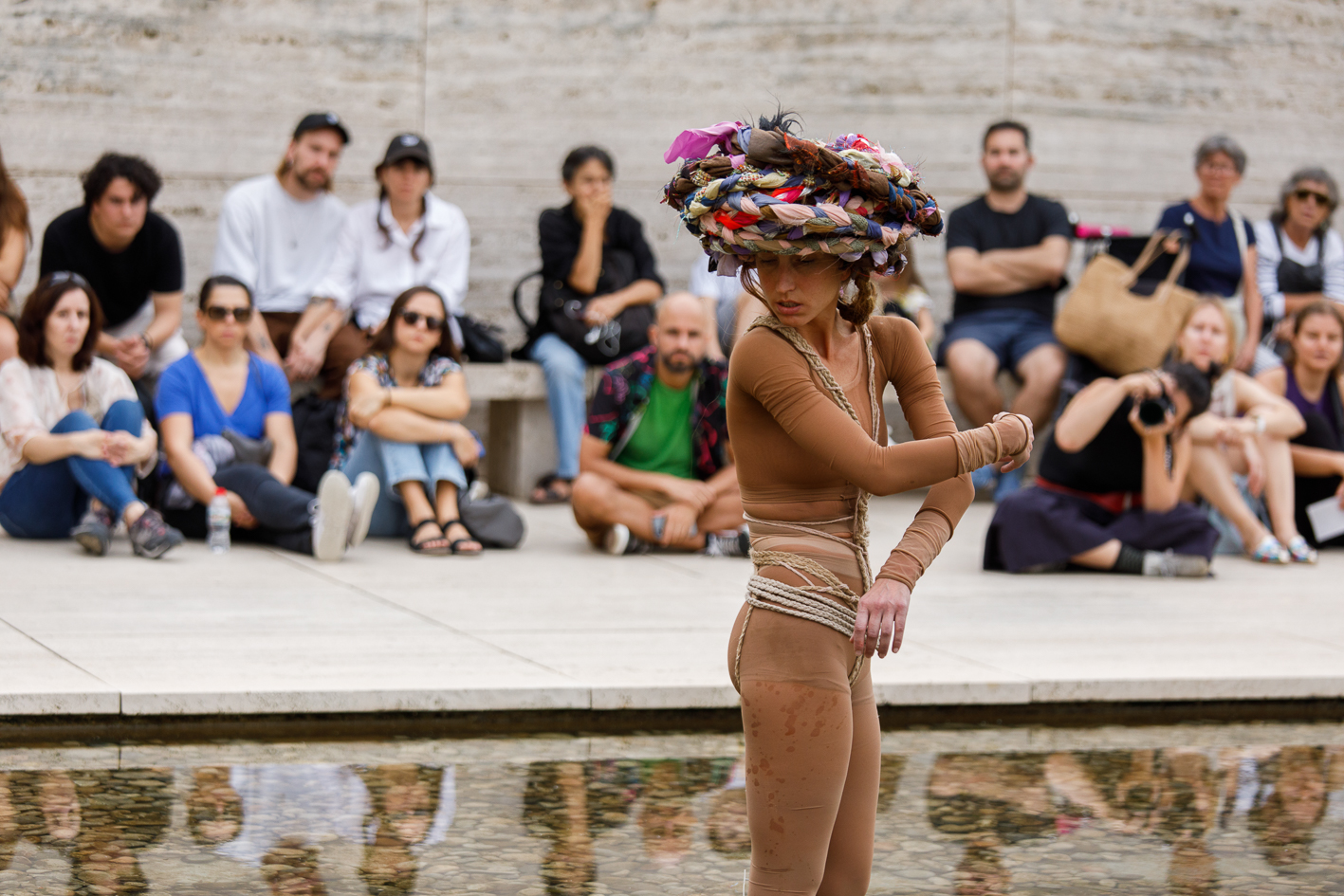
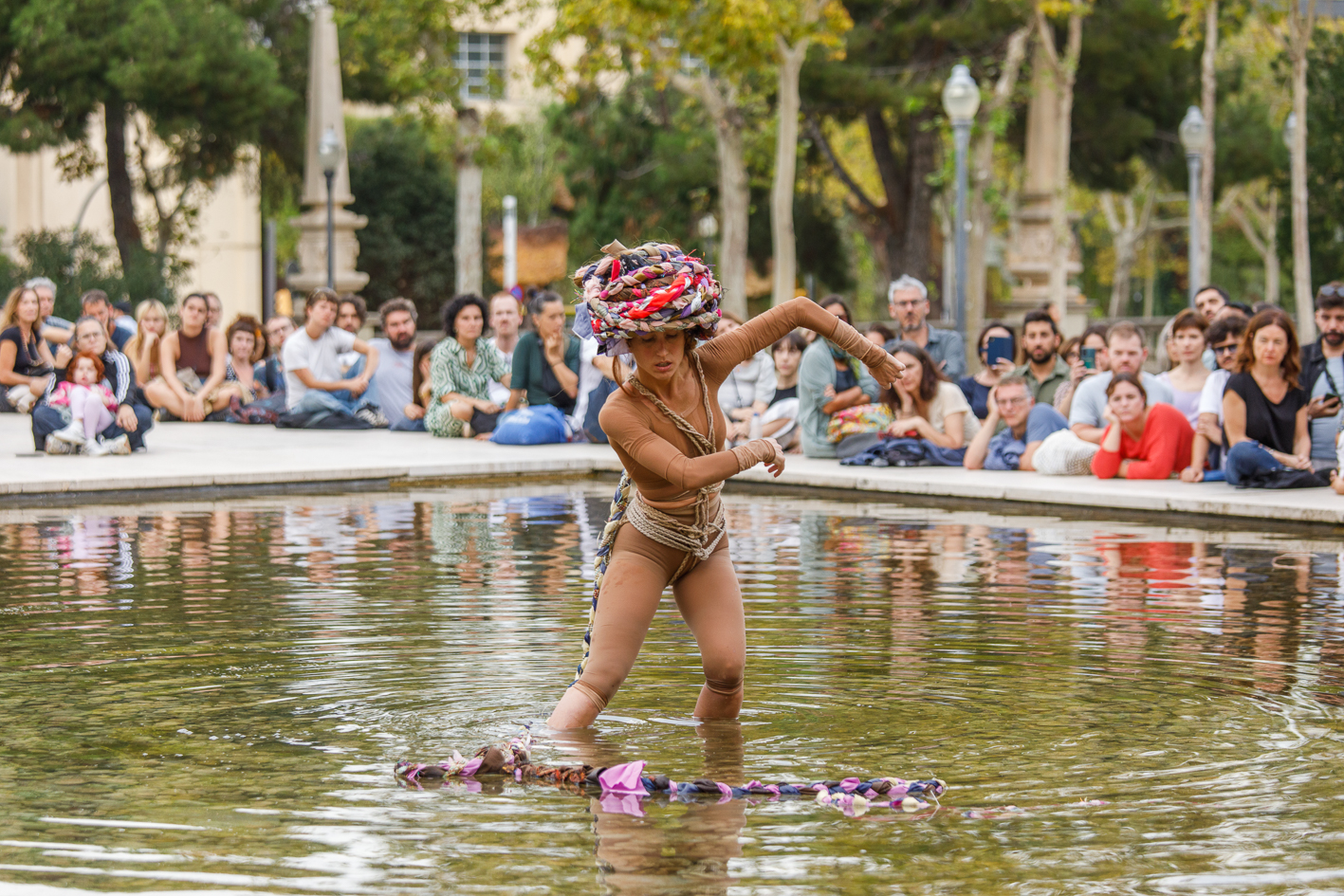
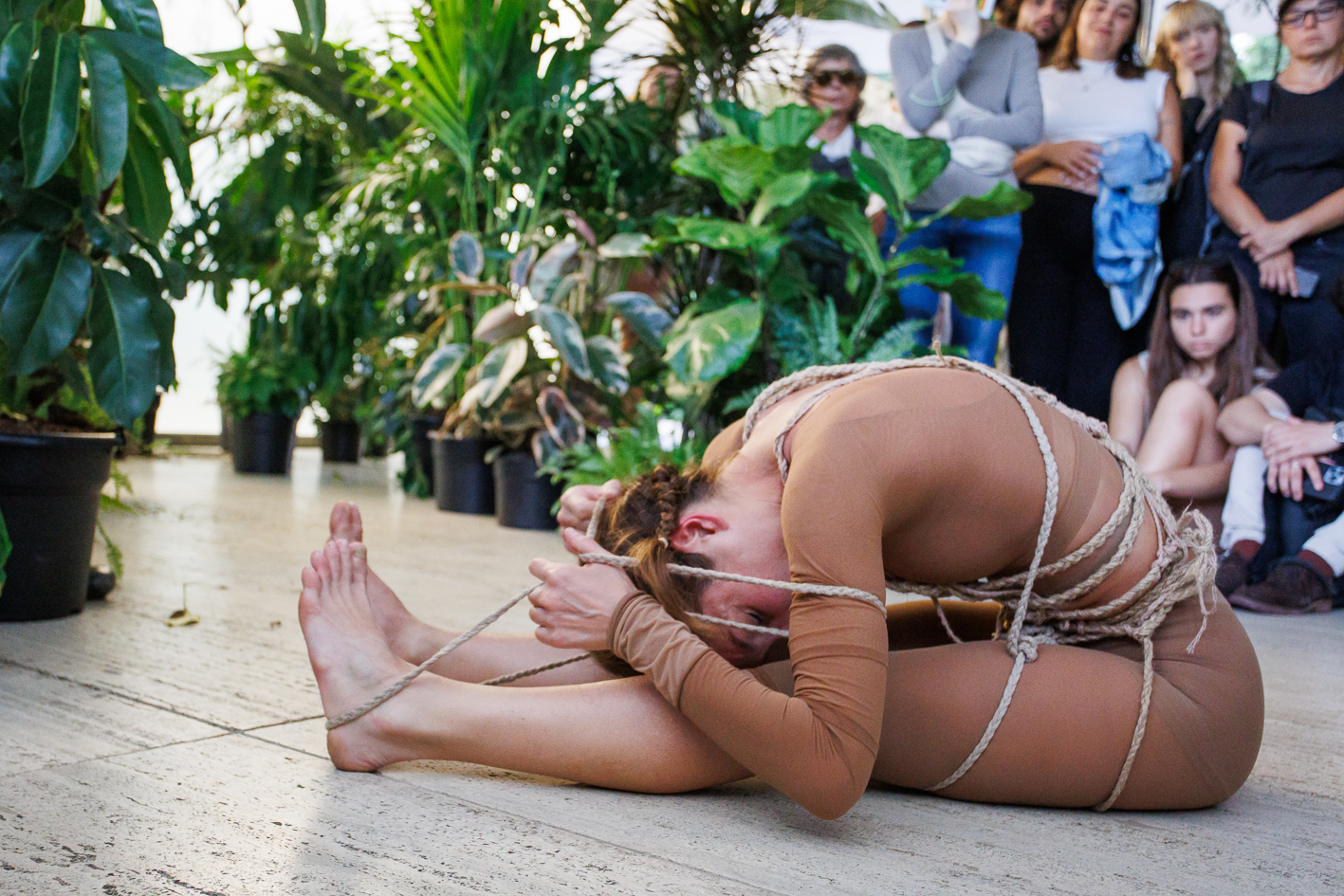
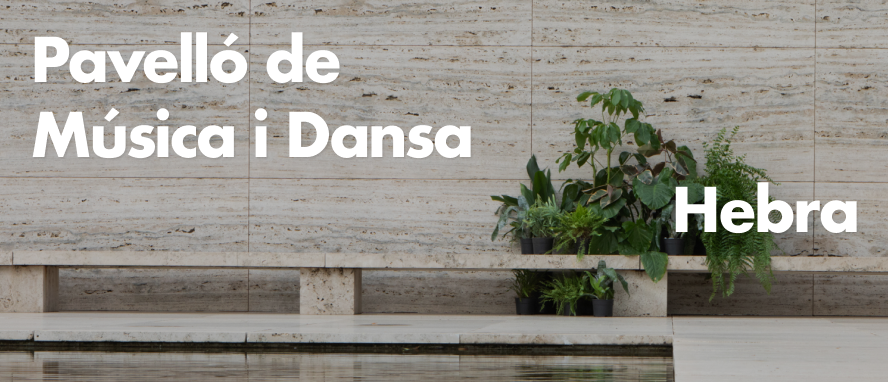
HEBRA is a solo performance set in a pavilion filled with tropical plants, transcending the limits of dance by connecting the performer’s body with the vegetal and architectural bodies.
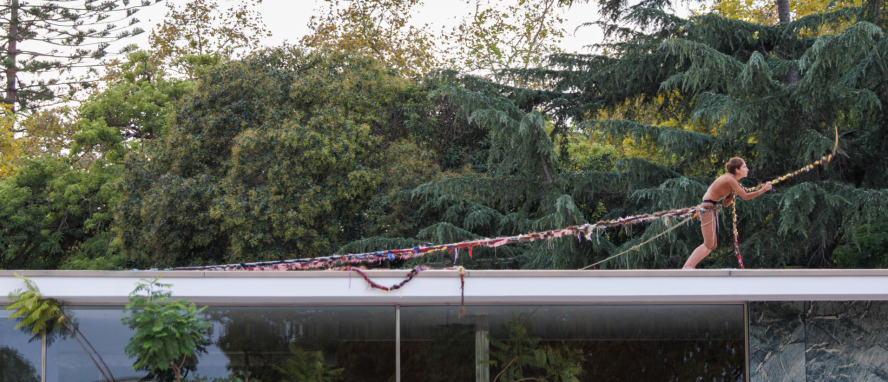
HEBRA consists of three scenes, each lasting 15 minutes, located in three different spaces of the Mies van der Rohe Pavilion: the outdoor pond, the interior of the pavilion filled with tropical plants, and the pavilion’s roof. The three scenes create a type of bond with the space. A literal bond, woven through the hair braids that extend and branch out from Paula Quintana to the architectural and vegetal bodies, and inversely, from these bodies to the dancer.
“A fabric between bodies of diverse natures that reminds us of the reciprocity of our relationships and actions, and the network of which we are part. A continuous dance between bodies, natures, and scales that respond to each other. A network that we sustain and that sustains us through time and space. A call to responsibility toward the beauty and delicate power of this woven fabric.”
Artistic accompaniment: Javier Azorena
Sound space: Aire_
Props: Matias Zanotti
Paula Quintana
Paula Quintana founded her company in 2014. The dancer and choreographer is interested in how the body speaks about the world and how the world speaks about the body. “I am a dweller of this time,” she explains, “and I want to establish a dialogue with the audience among contemporaries, appealing to intuition and reflection, addressing themes that challenge us, affect us, and move us.” In Paula Quintana’s work, the crisis of the current human community emerges, faced with a paradigm shift. Three intentions also surface: the first, to equate the knowledge of the body—its impulses, breaths, and movements—with other fields of knowledge; the second, to explore the possibilities of art as a driver of social transformation; the third, to build bridges with a wide spectrum of audiences, beyond the circles of contemporary scene.
Her works have been presented in Spain, Italy, France, South Korea, the United Kingdom, Congo, Uruguay, and the United States, among others. Her career has been recognized with six nominations for the Max Performing Arts Awards (2016 and 2020), the Best Interpretation Award at the Réplica Performing Arts Awards (2019), the First Prize at the III European Women Creator Contest (2016), and the Special Award for Best Emerging Artist at the Umore Azoka Fair (2015), among other accolades.
She has been an artist-in-residence at the Graner Creation Center in 2022, at the Teatro de La Abadía in 2021, at the Cité International des Arts in Paris and the Centre National de la Danse in 2019, and at the Teatros del Canal in Madrid from 2015 to 2019. In 2021, she was selected for the Art For Change program by the La Caixa Foundation. In 2023, she was in charge of the choreography and artistic direction of Blanca Paloma’s performance at the Eurovision festival. In 2024, she will be the choreographer for the Max Awards gala.
She is currently immersed in the creative process of her latest show, Atlas de Anatomía Humana, a piece with flamenco heartbeat (“my maternal grandmother used to sing me lullabies in bulerías,” she recalls) that she creates in dialogue with other female creators.
Her repertoire includes the trilogy composed of Huerto (2023), a work where dance, sciences, and ritual coexist; La Carne (2020), a sci-fi fable about a woman’s resistance against a fate that relegates her to the dark corner of History; and Las Alegrías (2019), a piece about joy as a transformative and revolutionary power.
Date
05.10.2024 - 06.10.2024, 18:00h
Organised with
Place
Mies van der Rohe Pavilion